Celebrating the Fusion of Divinity: A Look at Datta Jayanti Dt.26/12/2023
Introduction:
Datta Jayanti, also known as Gurudev Dattatreya Jayanti, is a joyous occasion celebrated by Hindus across India and other parts of the world. It marks the birth anniversary of Lord Dattatreya, a unique deity who embodies the divine essence of the Hindu Trinity – Brahma, Vishnu, and Shiva. This festival falls on the full moon day of the Margashirsha month in the Hindu calendar, which usually corresponds to December or January.
Lord Dattatreya: The Divine Teacher
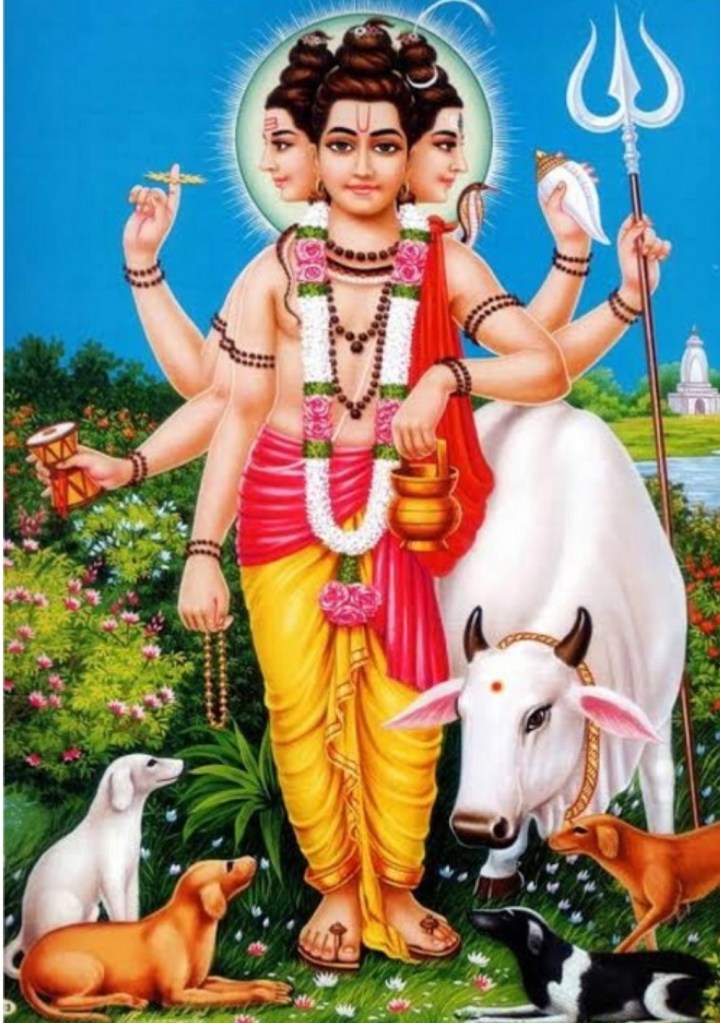
Lord Dattatreya is depicted as a three-headed, four-armed figure, each head representing one of the Trimurti gods. He is often seen holding a book and a kamandalu (water pot), symbolizing his wisdom and compassion. He is revered as a spiritual guide and teacher, offering guidance and enlightenment to those who seek him.
Significance of Datta Jayanti
Datta Jayanti is a day of devotion, prayer, and celebration. Devotees gather in temples and homes to offer puja (worship) to Lord Dattatreya. They chant hymns, sing bhajans (devotional songs), and offer flowers, fruits, and incense. The day is also observed as a time for reflection and introspection, as devotees seek to emulate Lord Dattatreya’s teachings of simplicity, selflessness, and living in harmony with nature.
Celebrations and Traditions
The festivities of Datta Jayanti vary across different regions of India. In Maharashtra, where Lord Dattatreya holds a special significance, grand processions are held, and devotees throng the holy town of Gangapur, known for its Datta temple. In other parts of the country, people participate in satsangs (spiritual discourses), kirtans (devotional singing), and feasts.
Beyond Rituals: Embracing the Essence of Datta Jayanti
Datta Jayanti is more than just a day of rituals and celebrations. It is a reminder of Lord Dattatreya’s timeless teachings, which are as relevant today as they were ever. His message of living a simple life, embracing the natural world, and finding wisdom in everyday experiences is a powerful antidote to the anxieties and complexities of modern life. By celebrating Datta Jayanti, we not only honor this divine being but also commit ourselves to following his path of wisdom and compassion.
Conclusion:
Datta Jayanti is a vibrant festival that celebrates the fusion of divinity, wisdom, and nature. It is a time to reconnect with our spiritual core and seek guidance from Lord Dattatreya’s teachings. As we immerse ourselves in the festivities of this auspicious day, let us remember that the true essence of Datta Jayanti lies in embracing the values of simplicity, compassion, and living in harmony with all creation.
Additional Notes:
- This article provides a basic overview of Datta Jayanti. For a deeper understanding, you can explore various online resources and books on Lord Dattatreya and his teachings.
- If you are interested in attending Datta Jayanti celebrations, you can find information about events and gatherings in your local community or online.
- Remember that Datta Jayanti is a day of joy and celebration, so let your spirit be uplifted as you participate in the festivities and reflect on the wisdom of Lord Dattatreya.
I hope this article provides a glimpse into the significance and celebrations of Datta Jayanti. May this festival bring you joy, peace, and enlightenment.
Introduction:
Datta Jayanti, also known as Gurudev Dattatreya Jayanti, is a joyous occasion celebrated by Hindus across India and other parts of the world. It marks the birth anniversary of Lord Dattatreya, a unique deity who embodies the divine essence of the Hindu Trinity – Brahma, Vishnu, and Shiva. This festival falls on the full moon day of the Margashirsha month in the Hindu calendar, which usually corresponds to December or January.
Lord Dattatreya: The Divine Teacher
Lord Dattatreya is depicted as a three-headed, four-armed figure, each head representing one of the Trimurti gods. He is often seen holding a book and a kamandalu (water pot), symbolizing his wisdom and compassion. He is revered as a spiritual guide and teacher, offering guidance and enlightenment to those who seek him.
Significance of Datta Jayanti
Datta Jayanti is a day of devotion, prayer, and celebration. Devotees gather in temples and homes to offer puja (worship) to Lord Dattatreya. They chant hymns, sing bhajans (devotional songs), and offer flowers, fruits, and incense. The day is also observed as a time for reflection and introspection, as devotees seek to emulate Lord Dattatreya’s teachings of simplicity, selflessness, and living in harmony with nature.
Celebrations and Traditions
The festivities of Datta Jayanti vary across different regions of India. In Maharashtra, where Lord Dattatreya holds a special significance, grand processions are held, and devotees throng the holy town of Gangapur, known for its Datta temple. In other parts of the country, people participate in satsangs (spiritual discourses), kirtans (devotional singing), and feasts.
Beyond Rituals: Embracing the Essence of Datta Jayanti
Datta Jayanti is more than just a day of rituals and celebrations. It is a reminder of Lord Dattatreya’s timeless teachings, which are as relevant today as they were ever. His message of living a simple life, embracing the natural world, and finding wisdom in everyday experiences is a powerful antidote to the anxieties and complexities of modern life. By celebrating Datta Jayanti, we not only honor this divine being but also commit ourselves to following his path of wisdom and compassion.
Conclusion:
Datta Jayanti is a vibrant festival that celebrates the fusion of divinity, wisdom, and nature. It is a time to reconnect with our spiritual core and seek guidance from Lord Dattatreya’s teachings. As we immerse ourselves in the festivities of this auspicious day, let us remember that the true essence of Datta Jayanti lies in embracing the values of simplicity, compassion, and living in harmony with all creation.
Additional Notes:
- This article provides a basic overview of Datta Jayanti. For a deeper understanding, you can explore various online resources and books on Lord Dattatreya and his teachings.
- If you are interested in attending Datta Jayanti celebrations, you can find information about events and gatherings in your local community or online.
- Remember that Datta Jayanti is a day of joy and celebration, so let your spirit be uplifted as you participate in the festivities and reflect on the wisdom of Lord Dattatreya.
I hope this article provides a glimpse into the significance and celebrations of Datta Jayanti. May this festival bring you joy, peace, and enlightenment.