Anyone who knows a bit about Hinduism is aware of Great Hindu Epic Ramayan with Shri Ram as the greatest hero and Ravan as the greatest villain. The war between Shri Ram and Ravan ends when Lord Ram kills Ravan with his arrow. But what happened after Ravan died. In many versions of Ramayan including Valmiki’s Ramayan it is mentioned that his dead body was cremated as per the rituals but many people believe otherwise.
Who is Ravan ?
As per one of the most revered hindu scripturesRamayanRavan is a very powerful demon king of Lanka. He abducted Devi Sita forcefully and as a result got killed by Lord Ram. Ravan was highly learned and staunch devotee of Lord Shiva but he was also personification of evil. His sins were to the extant that God Vishnu himself had yo take birth to kill him. Can you ever imagine Ravan to be back to life. Even the thought is enough to scare all the mankind.
What happened after Ravan died ?
After Lord Ram won the battle and Ravan was killed everyone was busy in celebrating their victory abandoning his dead body as it is. Then Shri Ram instructed Vibhishan( brother of Ravan) to perform his last rights but he was in a hurry to take control of the throne so he left Ravan’s dead body as it is. Later when he returned there he could not find his dead body. Ravan was a good friend of the Naga king and it is believed that the Naga people took his dead body with them. The people of Nagkul believed that the death of Ravan was temporary and he could be revived. They made numerous efforts to bring him back to life but failed everytime. Finally they preserved his body by applying various chemicals so that it could be revived sometime in future.
Where is Ravan’s body ?
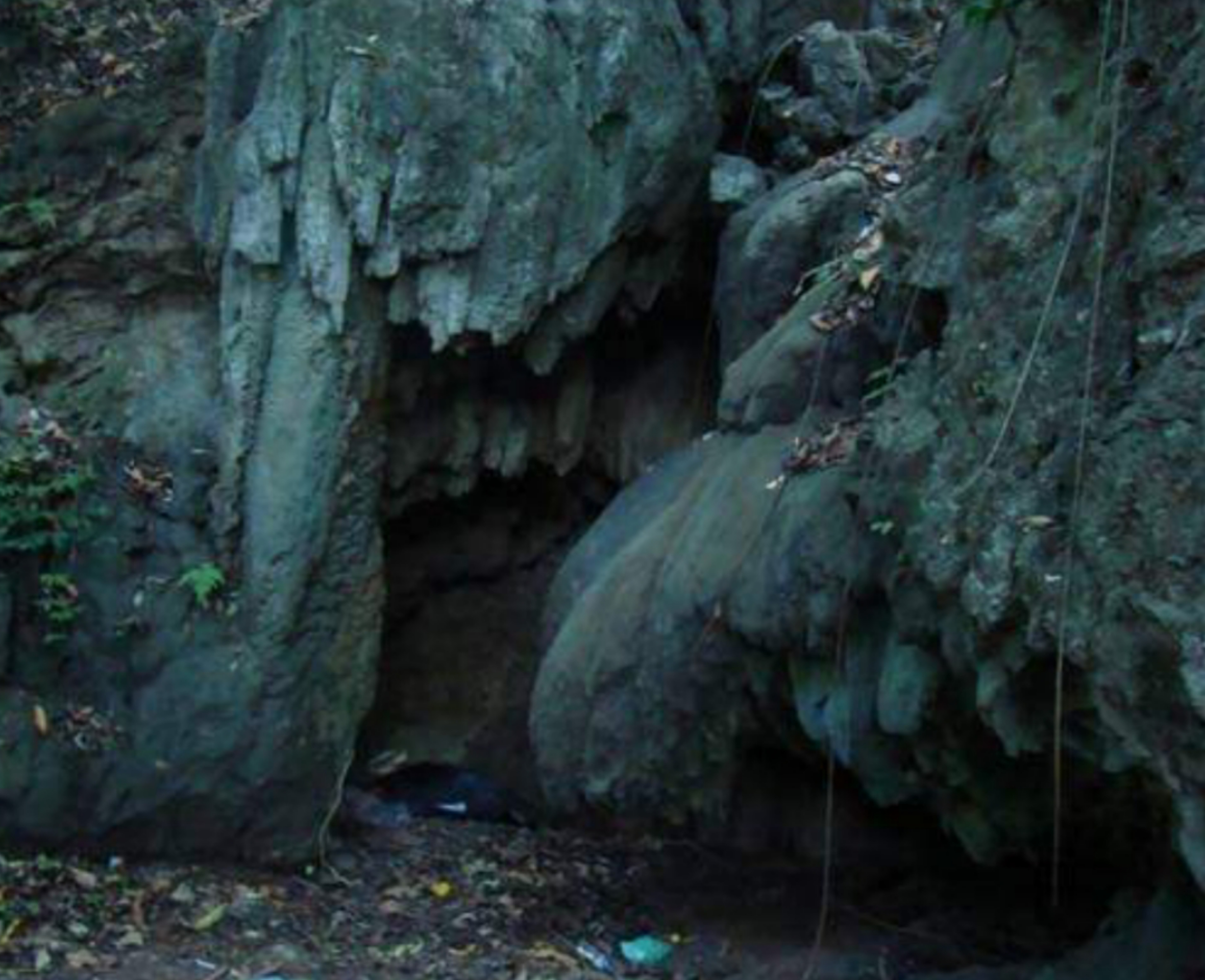
The question here arises that if the body of Ravan is preserved then where it is now. In the dense jungles of Ragla, Sri Lanka a cave was discovered by Sri Lanka’s’ International Ramayan Research Center and the Ministry of Tourism. In this cave exists a thousands of years old mummified body guarded by fierce snakes. This mummy which is believed to be of Ravan has a special type of coating which preserved it for thousands of years and is closed in a 18 feet long casket. It is also believed that treasure of Ravan is also suppressed underneath.
It solely depends on an individual to believe whether last rights of Ravan were performed or his body was preservd. But the slightest possibility of his body being preserved for the purpose of revival is enough to send chills imagining what will happen if he ever comes back to life.
Today we are celebrating Hanuman Jayanti. On this auspicious day you will be glad to know how our ancient text about Lord Hanuman contains a very important scientific fact.
If we look back at our ancient texts we realize that a lot was known by our ancestors that we somehow have forgotten and when these things are rediscovered we tend to believe that a new discovery has happened. One such thing is the distance between the Sun and the Earth.
What is the distance of Sun from Earth & Who discovered the Astronomical Unit
The distance between the Sun and the Earth is 1.49 million kilometres. The orbit of earth around the sun being elliptical the distance actually varies at different points by 3% and the average of these values is considered as the distance which is known as an Astronomical unit. In 1653 Christiaan Huygens calculated the distance between the Sun and the Earth. With due respect to his discovery he has also explained how he calculated this using the phases of Venus to find the angles in a Venus-Earth-Sun triangle.
Is this a new discovery ?
Above I have mentioned what is widely known and now I will mention something that is not known. 16th century Indian spiritual poet Tulsidas (1532-1623) has written a devotional hymn address to Lord Hanuman known as Hanuman Chalisa. The exact date of writing of Hanuman Chalisa is not known but it could be easily concluded that it was written before 1623. Along with Ramcharitmanas, Hanuman Chalisa were written by him inspired by Valmiki’s Ramayan which was written in 3rd century BCE. Now the question is how Hanuman Chalisa is related to this complex calculation of Astronomical Unit.
Lord Hanuman
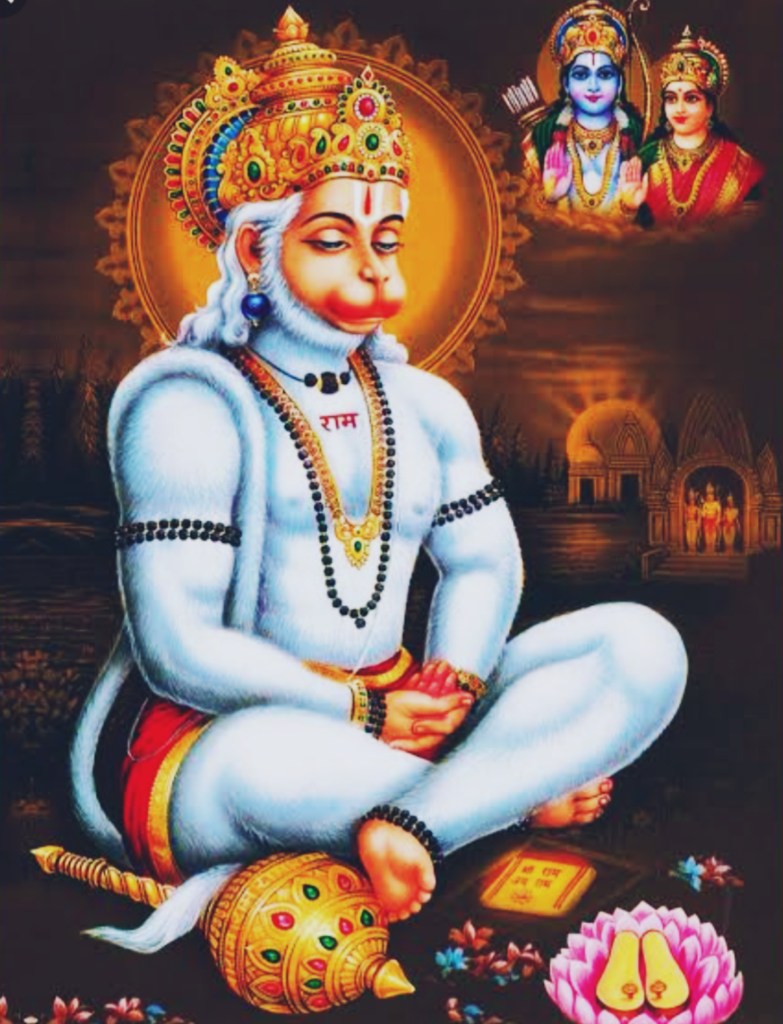
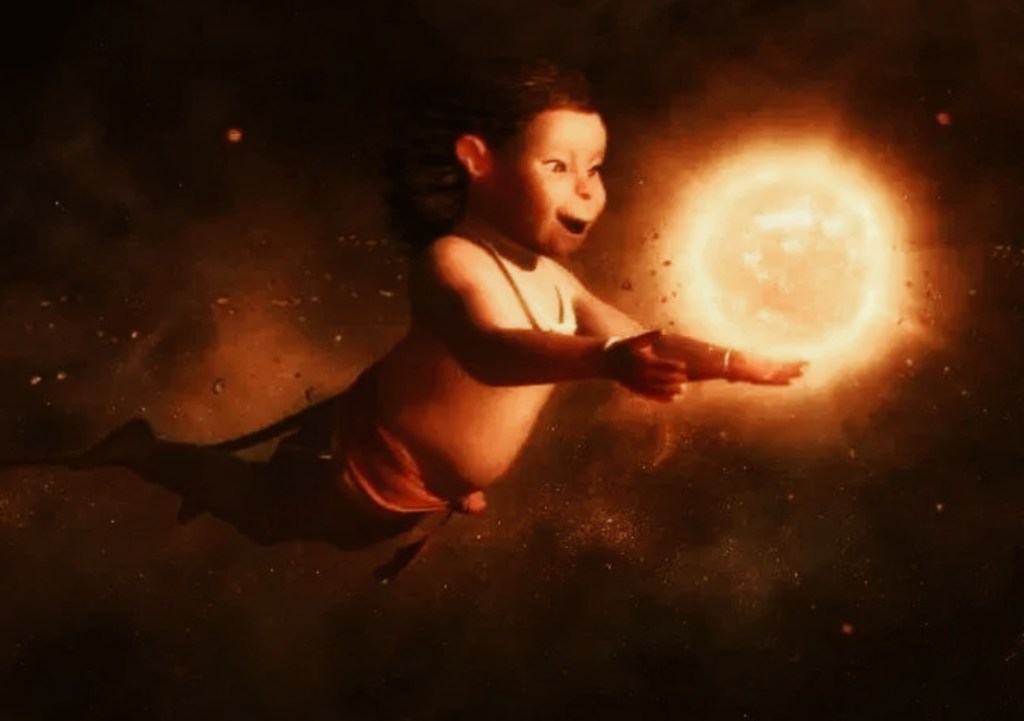
Hanuman Chalisa, Valmiki’s Ramayan and many other ancient religious texts of Hinduism depicts a story about Lord Hanuman that when he was a child he thought of the Sun as a tasty fruit and went on to eat it. Lets see what is written about this incident in verse 18 of Hanuman Chalisa.
Baby Hanuman going after Sun
जुग सहस्त्र जोजन पर भानू। लील्यो ताहि मधुर फल जानू।।
Jug sahastra jojan par bhanu | Leelyo tahi madhur fal janu ||
The meaning of this verse is Bhanu which means Sun is lying at a distance of Jug sahastra jojan and Hanuman dashed upon it thinking it to be a sweet fruit. Being in Awadhi language Yug and Yojan are written as Jug and Jojan which means the same.
Now lets get to the calculations. 1 Jug(Yug) is a timespan of 12000 years and it is very common in ancient texts to use it as a unit to denote the figure 12000 . Sahastra is a Sanskrti word used to denote 1000. Jojan(or Yojan) is a unit of distance equal to 8 miles. Now,
Jug Sahastra Jojan
12000 * 1000 * 8 = 9,60,00,000 miles
Since 1 mile = 1.6 kms
9,60,00,000 * 1.6 = 15,36,00,000 kms or 153 million kms. Now the distance of Sun from Earth during aphelion i.e., when the Sun is farthest is 152 million kms approx.
Another notable thing is that Tuslsidas was no scientist but a poet and nowhere had he mentioned how he derived this distance. Calculations or whole descriptions of anything are mentioned mostly when the discovery is new. When something is widely known these thing are not mentioned. Now the Valmiki’s Ramayan which dates back to 3rd century BCE also mentions this incidents and these stories about Lord Hanuman are way older than this. But we can easily conclude that the distance between the Sun and the Earth is widely known to Indians years ago. The question here arrives how we lost our great knowledge about astronomy. We can hope all this can be unearthed soon but as of now there are a lot of scientific discoveries that can be found when we go through our ancient sacred texts.
While Odisha was being rules by the Marathas during 18th century a man discovered the temple but it was abandoned and badly covered in overgrowth. Then last mention of prosperous Konark temple dates back to 16th century. The Akbar Era text Ain-i-Akbari by Abul Fazal mentions Konark temple and described it as a prosperous site that made visitors “astonished at its sight”. It mentioned the temple in its full glorious form with no mention of ruins. There are a few theories associated with its damage.
The Natural Damage Theory
It is believed that due to the use of poor quality Khandolite eventually led to the temple’s decay. It is mentioned in the NCERT books that the Shikhar of the temple was very high as it reached 70 metres proved too heavy for the structure and it ultimately fell down. This theory seems doubtful due to the presence of other grand temples nearby. Texts from 17th century mentions about the decay and repair being done at the temple which suggests that the decay started somewhere between late 16th century and 17th century.
The Islamic Invasion theory
If we look back at the Islamic texts they mention that the temple was attacked sevaral times by Muslim armies between 15th century and 17th century. They also mention Kalapahad attempted to destroy the temple in 1565 but it inflicted only minor damage and all he could get was the copper kalasa. The hindu text Madala Panji and local stories state that Kalapahad attacked again in 1568 and damaged the temple.
Later on a great amount of damage was done the same way as with other monuments of India. On small scale local people used to take away stones and other things with them. The Raja of Khurda in 19th century removed some stones and sculptures from the temple to use them in the temple he was building in Puri. The Aruna Stambh was relocated to Jagannath temple Puri and placed at its Singhadwara (Lion’s gate). Finally in 1984 the temple was granted World Heritage Site status by UNESCO.
One of the greatest mystery that also seems to be the most shocking fact about the Konark temple of Odisha is that whether Sun God was worshipped there or not. It is shocking to know but many people believe that the Sun God was never ever worshipped in ancient temple. Why worship was not done in this grand temple is related to the legend of Dharm pada, the 12 year boy who installed the lodestone.
But later on it was reveled that it is just myth and there were ancient texts available that described worship being done in the temple. The Kenduli Copper Plate inscription of 1384 CE also clearly indicates that the temple was an active site of worship. There are records from 17th century as well that states that worship was being done in the temple.
The mystery of disappearance of River Chandrabhaga
If you go through the ancient texts, manuscripts, preserved palm-leaf drawing and sketches including …… They all indicate the presence of Chandrabhaga river. The story of Dharm pada also mentions that the Sun temple is made beside the Chandrabhaga river but currently no river or even traces of river are found in the proximity of the temple. How the Chandrabhaga river disappeared and did it ever exist remains a mystery.
Although majority of the temple has been in ruins but on seeing whatever is left one can easily feel the grandness and wonderful engineering of ancient India.
The great masterpiece of engineering, Sun temple of Konark, was built by King Narsimhadeva-I in in 13th century CE(year 1250). It is said that the temple took 12 long years for its completion and around 1200 workers worked day and night staying away from their families to complete it.
Amongst all the mysteries associated with the Sun temple of Konark (click here to read detail the mystery of konark temple part1, the mystery of konark temple contd.. part2) King Narsimhadeva I had given a deadline for its completion to its Chief Architect Bishu Maharana. Everything was completed in time except for the crown stoneDadhinauti. The crown stone was an around 52 ton weighing lodestone. Every time they tried to place it it used to fall down. The King had given warning to him that if the temple would not be completed withing the stipulated time all the 1200 workers will be beheaded.
Deeply disturbed Bishu Maharana was thinking how to complete this task just a day before the deadline is going to end when he saw a boy coming to him. The name of that 12 year old boy was Dharmpada. The boy told him that he was his son whom he did not knew because of staying away from his family for construction of the grand temple. He told Dharmapada about his problem.
When everyone woke up in the morning they saw that the crown stone had been installed by Dharmpada. Everyone was happy but suddenly they all got worried how the King would react when he gets to know that a 12 year old boy did what 1200 experienced workers were unable to do. They were terrified of king Narsimhadeva ‘s anger and thought he will kill all the workers.
Look at the worries of the workers Dharmapada jumped in the Chandrabhaga river from the top of the temple and died. It is believed that Dharmpada was an avtar of Surya dev (Sun God) who came to break the ego of king Narsimhadeva.
Earlier it was believed that the suicide of Dharmpada made this temple unholy and Sun God was never worshipped here but it was later it was found that the temple was an active place of worship.
Even after knowing the legend of Dharmpada it is still unknown how the 52 ton weighing lodestone was placed on the crown of this ancient temple.
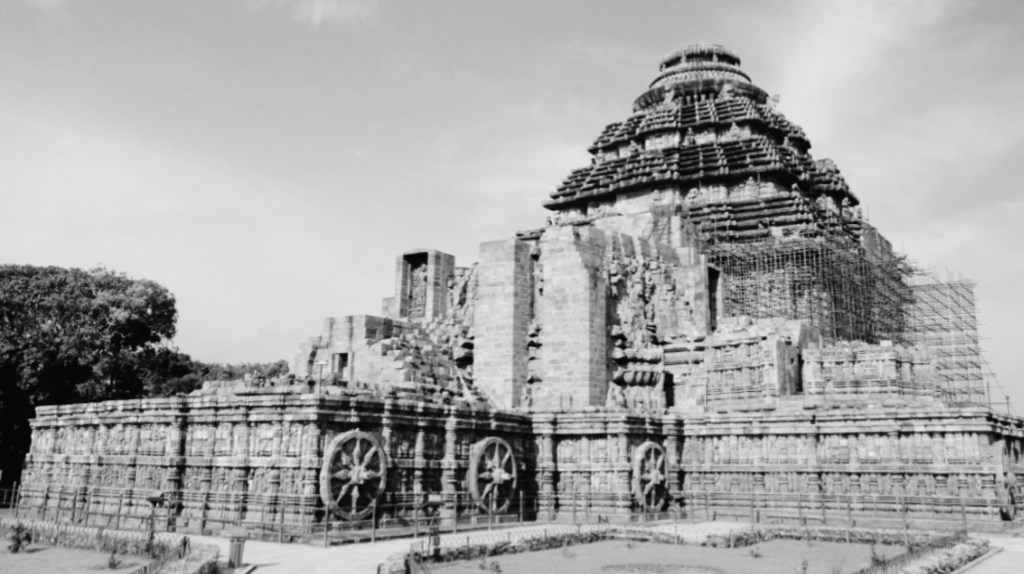
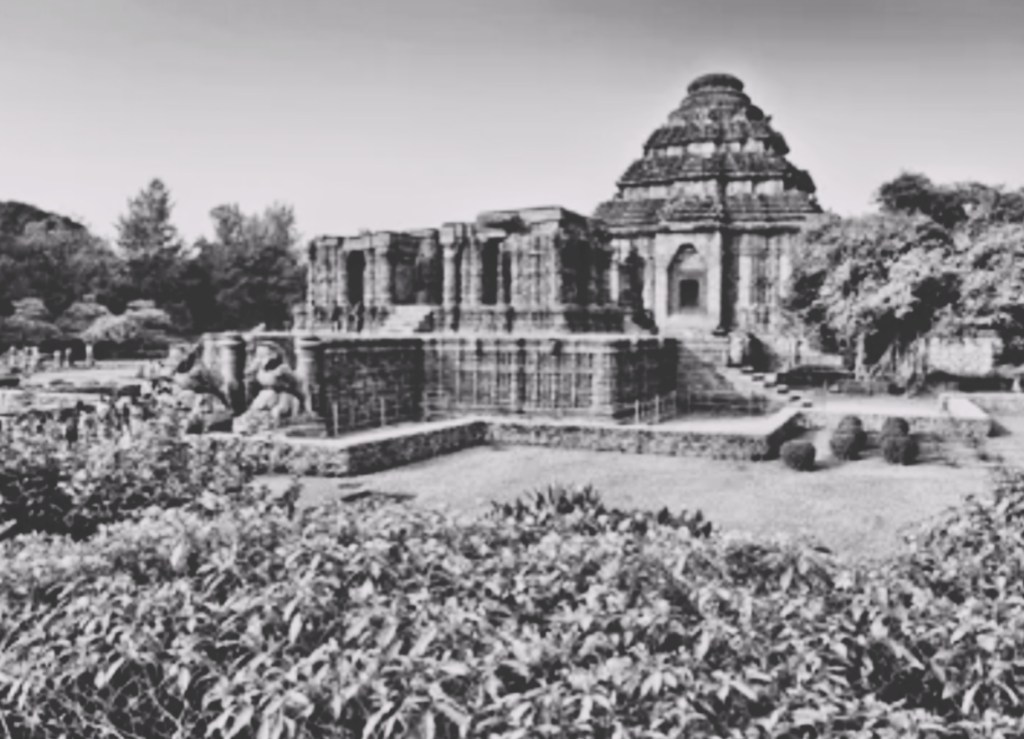
Sun temple of Konark, situated in the Konark town under Puri district of Odisha, is one of the greatest architectural works of India which intrigues not only Indian but also people from all over the world. The architectural grandeur that today stands about 100 foot (30 meter) high was believed to be over 200 foot (61 meter) once. Built in 13th century CE (year 1250) it is situated 35 kilometres (22 miles) northeast from Puri on the coastline of Odisha.
Who made Konark Sun Temple and Why
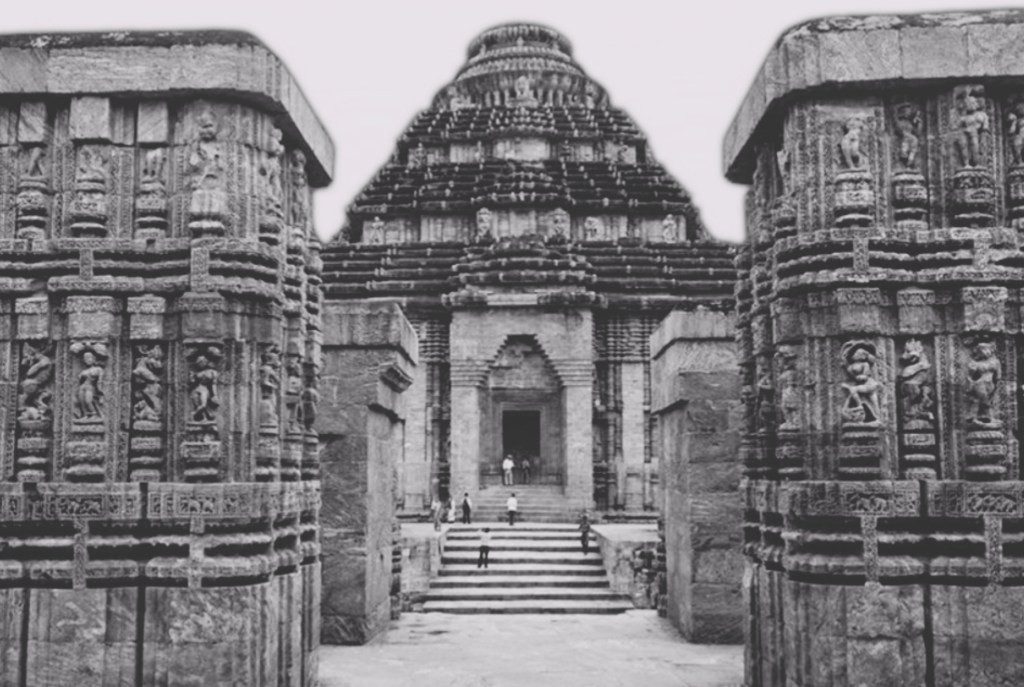
Konark Sun temple was made by King Narasimhadev I of the Eastern Ganga Dynasty. The exact reason for why King Narasimhadeva built this temple is unknown but may historians believe that it might be to commemorate his conquest over Islamic invasion or gratitude for wish fulfillment. It could have been made simple to show his devotion to Surya Dev (Sun God). Homage to all sects of Hinduism can be seen in this temple. While the lower side is carved with sculptures of various dieties, people doing daily chorus, animals some of these being quite strange, and erotic sculptures from Kamasutra the upper level has larger and more significant images. Sculpture pertaining to Shaktism, Vaishavism and Sahivism can be seen at the higher side including Goddess Durga as Mahishasur Mardini killing the shape shifting buffalo, Lord Vishnu in his Jagannatha form and Lord Shiva in his Shivling form (though it is largely damaged).
According to Hindu mythologySurya dev (Sun God) is believed to be born in Kalinga, that is, present day Odisha. The work Konark is derived from Sanskrit word ‘Kona’ (kon) meaning corner or angle and ark meaning Surya dev (Sun God). People generally think why it is referred to as a Kona or angle the reason for this being Konark temple being a part of the Holy triangle of Kalinga. The holy triangle of Kalinga comprise of Lord Jagannath Temple of Puri, Lingraj temple of Bhubaneshwar and Sun temple of Konark, thus explaing the meaning of Kona that is angle of this triangle.
The mystery of the Sun temple of Konark
This ancient temple of India which is famous worldwide have a few mysteries associated with it as well.
The intricate architecture & How the heavy crown stone was placed ?
Architectural Marvel
Konark sun temple originally was made in the form of a huge chariot beautifully ornamented with 24 elaborately carved wheels which are nearly 12 feet (3.7 meter) pulled by a set of seven horses. When viewed from inland it presented a beautiful view of the chariot shaped temple appearing to be emerging from the depths of blue sea carrying the Sun during the sunrise.
This UNESCO world Heritage site that is located around 67 kilometres from the capital of Odisha, Bhubaneshwar is made up of stones interlocked by metals and the entire metal skeleton was believed to be held together by a huge magnet weighing more than 5 tons. The fitting and finishing is so smooth that even now the joints are barely visible. For the construction of this grand piece of architecture three kind of stones were used namely, Chlorite, Laterite and Khondalite, none of which is available in its vicinity. How these huge stones were brought here still remains a mystery. Many people believe that the stones were brought from the hills of Kadamgiri and Udaigiri which are more than 100 kilometres from there may be using rivers and water channels or lever and pulleys but the exact method is yet unknown.
The planning and construction records of the temple have been preserved in the form of palm leaf manuscripts which makes this temple on of the very few such temples. These manuscripts are written in Sanskrit in Odia script. The crown stone known as Dadhi nauti was a lodestone weighing nearly 52 tons. Even after repeated efforts the 1200 workers were unable to place it. Every time they try to install it it will fall down. The legend of dharmpada says that it was installed by a 12 year old boy but how he installed it is still a mystery.
It is said that the idol of Sun God that was placed in the temple made of Ashtdhatu (alloy of 8 metals) and lodestone and metals were so used in the construction of the temple that the idol used to float in the air without touching the ground. But we have only heard about this idol. There is no account of anyone seeing it. Not even any image of the deity or surya Dev (Sun God) has ever been found so what was its shape and size is not known and remains a mystery till today.
Where are the idol and the lodestone still remains mystery. It is often said that the Portuguese or the British removed the lodestone as the strong magnet used to create disturbance in the navigation of their ships but removing or demolishing such a huge lodestone without leave a trace seems quite difficult. However how the idol and lodestone were removed and by whom and if the floating idol was a reality or not still remains mystery.
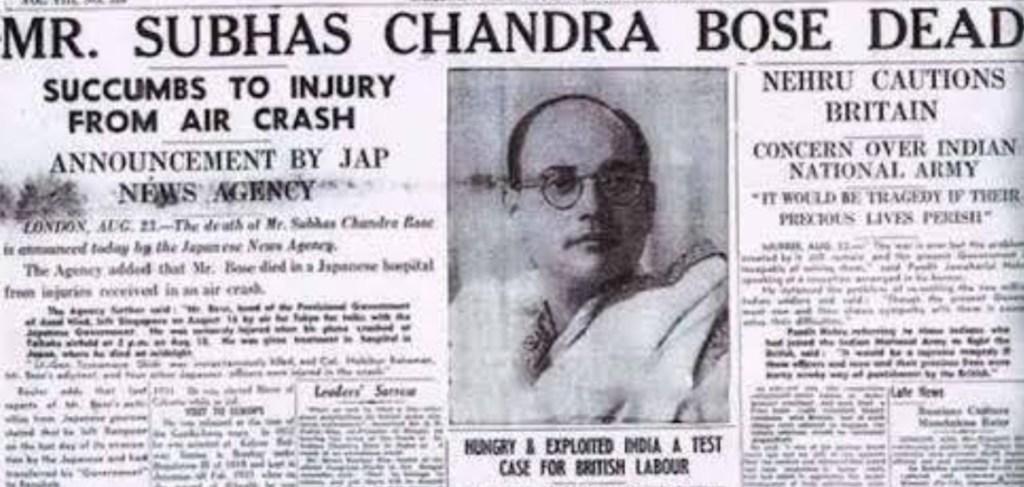
On 18 August 1945 at around 2:30 pm in Taihoku passengers of a plane heard some engine backfiring kind of sound. Before they could understand the situation the plane crashed breaking into two and exploded. The pilot along with 3-4 other people died on the spot. Two people, one fully soaked in gasoline, were still concious on the plane. They both tried to escape from the rear door but it was blocked by luggage. They then had no other option but to exit through the front door running through the flames. The ground staff saw two people one of whom had become a human torch because of being soaked in gasoline coming out of the front door of the plane. His face and head were badly burnt. He was none other than NetajiSubhash Chandra Bose and the other one being Habibur Rahman his assistant. Bose had severe third degree burns on his body and was rushed to the military hospital Taihoku. He was concious for sometime. Later inspire of the on going treatment ge went into coma and died on 18th August 1945.
Two days later on 20th August 1945 his body was cremated there only. His ashes are still placed at Renkoji Temple Tokyo. On 23rd August 1945 Japanese news agency announced his demise.
Subhash Chandra Bose and INA (Indian National Army)
Subhash Chandra Bose, born on 23 January 1897 in a well to do family of Cuttack Odisha, is an Indian nationalist with defiant patriotism. His father Janakinath Bose was a successful lawyer and government pleader. After joining Congress he rose to become its President in 1938. He was reelected in 1939 but due to his differences with Mahatma Gandhi he was ousted out from the leadership position of Congress. He stood for self governance (unqualified Swaraj) and the use of force against the British. Netaji was jailed several time. During 1925-1927 he was jailed in Mandalay Myanmar. It was the same time when he got tuberculous and also his mentor Chittaranjan Das died in Darjeeling.
Again in 1940-1941 Netaji Subhash Chandra Bose was jailed by the British government he was released following a 7 days long hunger strike. His residence at Calcutta was under survillance by CID. He secluded for a few days and avoided meeting any British guards to grow a beard. Disguised as a Pathan he escaped his house on 17 January 1941. Then sometimes disguised as a deaf and dumb tribesman or an Italian nobleman he reached Germany. Before that he also tried to gain support from Soviet Union against the British but got disappointed. He got the support of Adolf Hitler there and even found Azad Hind Legion out of 4000-5000 indian prisoners of war who had earlier fought for the British and planned to attack British in India with the help of Germany. But when Hitler attacked Soviet Union he got sceptical of his idea and when the Germans started retreating it became evident that the German army would be of any help. He then left for Japan. There he revived INA(Indian National Army) which even had a separate women’s unit Rani of Jhansi Regiment. Japan went on to take possession of Andaman and Nicobar islands with the help of INA but they also had other intentions and tried to control the administration there. Later with Japan’s surrender at the end of World War 2 (WW2) the remaining elements of INA also surrendered.
Conspiracy theories and investigations
The disappearance of Netaji Subhash ChandraBose gave birth to a lot of conspiracy theories like he is been arrested by Soviets or it is a ploy created by Netaji himself to reach a safe place and continue his struggle. As a result of which 10 separate investigations were conducted by the British government, the Japanese government, the Indian government and private sources but they all ended up with the same conclusion that he died in a plane crash due to severe third degree burns.
Although all investigations containing testimonies of Doctors, Nurses and other people concluded the same thing one investigation that was held in 1999 under Vajpayee government headed by Justice Manoj Mukherjee said otherwise. They dismissed the fact that there was any plane crash on 18th August citing a newspaper that it did not have any of of the crash. This later on proved to be a wrong inference as the newspaper cited by him was not a local newspaper at that time and this plane crash was covered in other newspapers. There were other facts like this one on the said report which later turned out to be ambiguous or false. So this flawed investigation fueled the conspiracy theories yet again. Although the reason of his death is ascertained to be the plane crash but the possibility of Japan or Allied forced behind the crash still exists.
Had this plane crash not happened we do not know how the fate of India would turned out to be. If Netaji would be alive we surely would be studying some different history of Modern India. However the government has decided to celebrate his birth anniversary 23 January as Parakram Diwas since 23 January 2021 to pay tribute to his contributions. Earlier in December 2018 Ross island that was named after marine surveyor Daniel Ross, it was renamed as Netaji Subhash Chandra Bose as a tribute to him.
On the occasion of death Anniversary of our former Prime Minister Late Sri Lal Bahadur Shastri, the fact that mystery of his death is still unresolved is deeply saddening. Despite being a Prime Minister it is hard to believe that nobody knows how he died and a country like India that aspires to become World Power chicken out about the death of its former Prime Minister even today.
Who is Lal Bahadur Shastri:
Late Sri Lal bahadur Shastri was the second Prime Minister of India. He had played a great role in promoting White Revolution & Green Revolution in India. His original surname was Srivastava. He was highly influenced by thoughts of Mahatma Gandhi, Swami Vivekanand and Annie Besant that is why he dropped his caste derived surname from his name. He led the country during the Indo-Pakistan War of 1965 and gave the slogan “Jai Jawan Jai Kisan”. Famous Actor and Director Manoj Kumar has produced his super hit movie “Upkar” based on this very slogan.
The Death Controversy
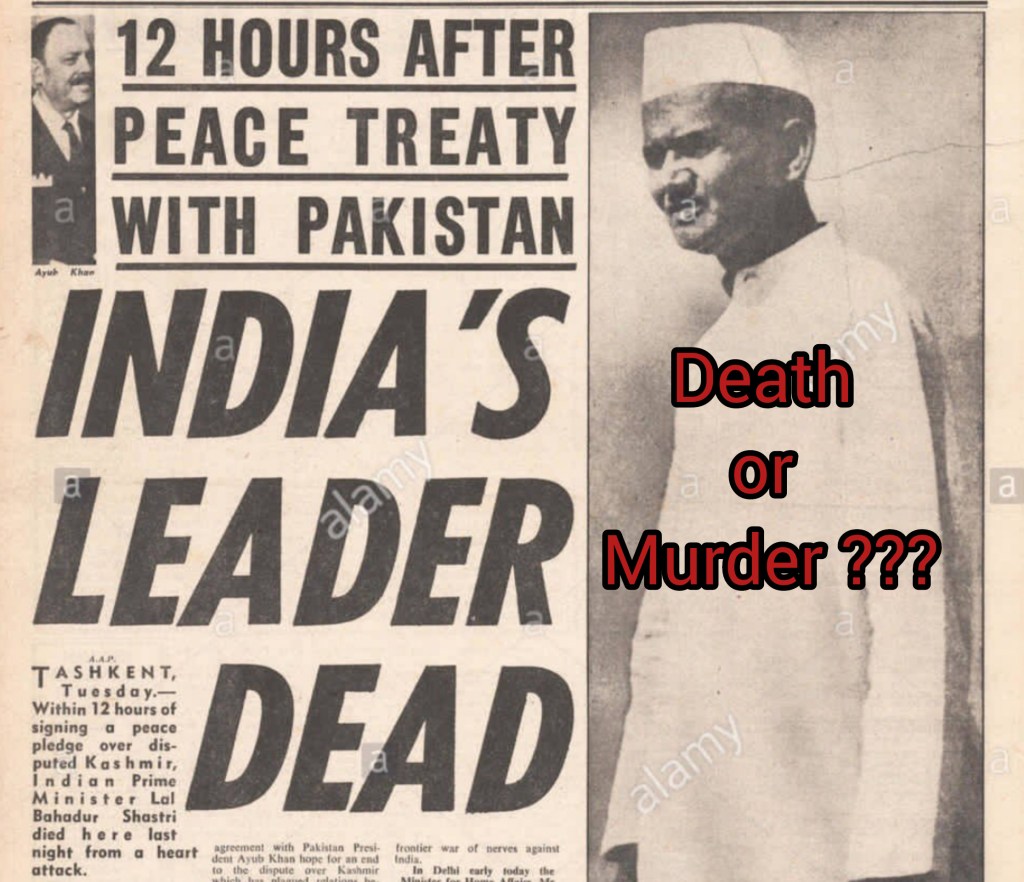
Just one day after signing a peace treaty to end the 1965 Indo-Pakistan War Shastri Ji died in Tashkent, Uzbekistan(then soviet Union) on 11th January 1966. Conspiracy theories started to appear within hours of his death and still persist as we have got no proper explanation or reason for his death. Most people at that time, and since, allege foul play regarding his death.
There are several reasons that suggest that something is not right about his death and some conspiracies do exist.
The media at that time kept silence and the government also did not release any information about his death. People tried to file RTI to gain information regarding his death but in vain.
Anuj Dhar, author of CIAs Eye on South Asia, posed a query under Right to Information Act to declassify a document supposedly related to Shastri’s death, but the Prime Minister’s Office declined the same reportedly citing that this could lead to harming of foreign relations, cause disruption in the country and breach of parliamentary privileges.
Another RTI was filed by Kuldip Nayar but it was also declined by PMO citing exemption from disclosure on the plea. No response has been received even yet about whether India had conducted post-mortem on Shastri Ji and if the government had investigated alleged foul play.
In reply to an RTI the Delhi Police said that they do not have any record pertaining Shastri’s death. The replay dated 29th July said “No such record related to the death of former Prime Minister of India Lal Bahadur Shastri is available in this district. Hence the requisite information pertaining to New Delhi district may please be treated as nil”.
The Ministry of External Affair had said that no post mortem was conducted in the USSR.
All these facts create suspicion about Shastri’s death and since then many conspiracy theories have emerged which involved role of either Soviet Union or United States of America.
The Soviet Union conspiracy theory
The discussions between Indian and Pakistani delegations virtually ended in a stalemate and till the late afternoon hours of 9 January 1966 it seemed that there would be no agreement between the two sides. Sensing that, many of the journalists went shopping. Suddenly, they were alerted that an agreement was imminent and would be signed between the two leaders at about 4.30 in the evening. Many journalists have raised the issue that Shastri who so far stood like a rock, unwilling to give up, looked a bit shaken at the agreement-signing ceremony. So what actually happened in the few hours that compelled Shastri to change his stance? If he was under tremendous pressure to accede to Pakistani demands then who created such pressures? And Shastri who maintained his composure, his determination for so long when it had become almost certain that there will be no agreement, under whose pressure made him give in?
The role of KGB behind Shastri’s death too has been conjectured by many. It is believed that T N Kaul, the then Indian Ambassador to the Soviet Union, was very close to the Soviets, his role behind the agreement and his silence even after Shastri’s death, is bound to raise some uncomfortable questions.
From the Soviet perspective, US was expanding its geopolitical influence in Asia. Pakistan had become an American ally and some reports suggested that they had allowed a secret base at Peshawar to be used by the USAF’s U2 spy planes that were deployed for surveillance of Soviet nuclear facilities, space research, and other secret works mostly done in Central Asia.
The Soviet Union as a means to please Pakistan took its side forcing India to accede to its request to that Pakistan could return the favor to them later on. Many journalists claim that they witnessed the amount of persuasion, insistence and implicit pressure was exerted on then Indian Foreign Minister Swaran Singh and probably Shastri by then Soviet PM Kosygin who was supposed to be mediating between India and Pakistan.
Following the Tashkent Treaty signed between Indian PM Shastri and Pakistani President General Ayub Khan on January 10, 1966, in the presence of the then Soviet PM Kosygin, the death of the PM Shastri the same night did raise many questions that remain unanswered even after almost 55 years.
The US conspiracy theory
Gregory Douglas, a journalists who interviewed former CIA operative Robert Crowley for more than 4 years recorded their telephone conversations. He published a transcription in his book titled Conversations with the Crow in which he claim that the CIA was responsible for eliminating Homi Jahangir Bhabha, an Indian nuclear scientist whose plane crashed in the Alps, when he was going to attend a conference in Vienna; and Lal Bahadur Shastri.
Crowley said that the USA was not happy with India’s rigid stand on nuclear policy of then prime minister Lal Bahadur Shastri who wanted to go ahead with nuclear tests. He also said that the agency was worried about collective domination by India and Russia over the region, for which they required a strong deterrent.
Its still not clear as to who was responsible for Shastri’s death but the circumstances under which he died and the incidents afterwards where his personal physician and assistant died under mysterious circumstances in New Delhi and the fact that stil no proper investigation has been carried out ever and the government of India is reluctant to share any information regarding it create concrete suspicion. As of now all we know is that just like the disappearance of Netaji subhash Chandra Bose or the death of former US President JF Kennedy, Shastri’s death also remains a mystry that has not been solved and might never be solved.