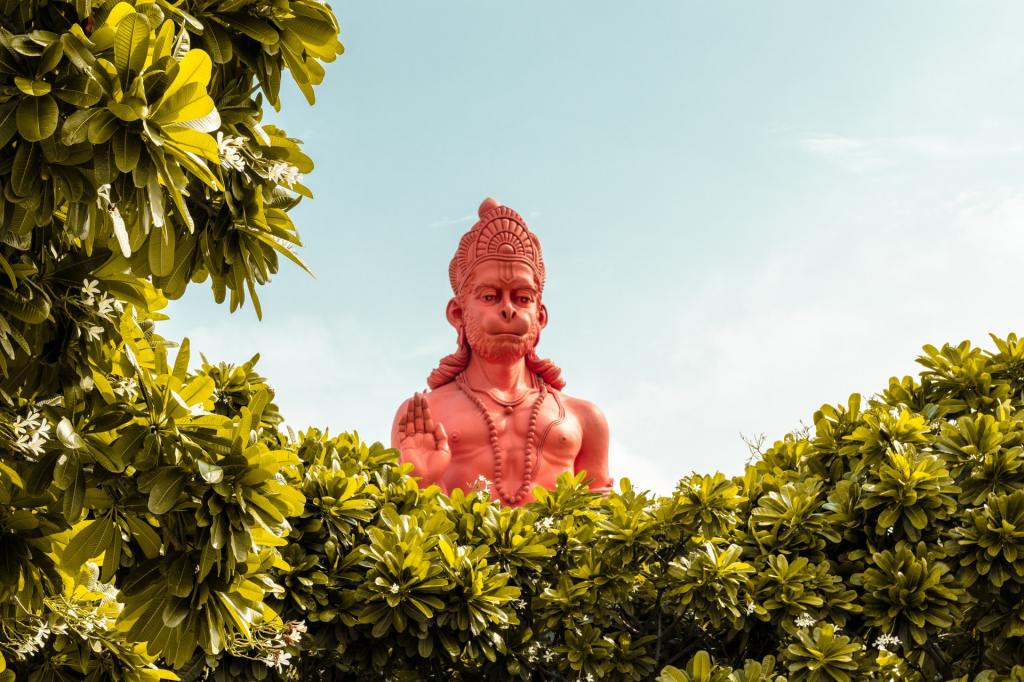
Tag: hanuman

  • Shri mahabali lords Birthday. Hanuman Jayanti 2022: know the auspicious Date, Puja timing, history of the day, significance of the holy Occasion.

    Every year Hanuman jayanti celebrated to commemorate the birth of Lord Hanuman the great mythical monkey God of india. This year the festival falls on April 16.The festival is celebrated every year on the full moon day during the month of Chaitra. On this day, devotees of Lord Hanuman visit hanuman temples located through out india in almost all cities and villages to worship the lord and offer him the bhog of boondi, laddoo and paan many other things.Gyms and akhadas all over india irrespective of the religion of the owner celebrate this festival with grand endeavour and large vegetarian feasts as lord hanuman in india is also worshiped by all physical fitness enthusiast.

    Date and timing of hanuman jayanti 2022. This year hanuman jayanti fall’s on 16th April and shall be celebrated with full rigour through out country after two years of sever covid hardship as both in 2020 and 2021 the month in which hanuman jayanti fell was marked peak covid waves with large no of casualties. According to Drikpanchang, Purnima Tithi begins from 02:25 am on April 16, 2022 and ends at 12:24 am on April 17, 2022.

    Significance of the day. Lord Hanuman is called sankatmochan means saviour from all dangers. So,Worshipping Lord Hanuman is said to protect people from evil and help emerge victorious. While the festival is celebrated on different days across the country, but the most popularly one is celebrated during Chaitra mass. The celebrations begin early in the morning on Hanuman Jayanti as it is believed that the lord was born at sunrise. The devotees also read verses from Ramayana and Hanuman chalisa,a holy ancient prayer dedicated to the lord and perform other prayers on this day.

    History of this day. He is the son of vayubhagwan the wind god,thus referred to as Pawanputra and Maruti Nandan which translate to son of Wind God. His other names are Sankatmochan and Dukhbhanjan as he is believed to help people get rid of their problems and sorrows. Hanuman was born to monkey queen Anjana who was a cursed apsara. She was redeemed from the curse after giving birth to Hanuman. According to legend, Anjana and her husband Kesari prayed to Rudra or shiva for a child and by his direction, Vayu transferred his male energy to monkey queen Anjana’s womb and this is the reason Hanuman is known as the son of vayu .Hanuman devotees often apply a tilak of sindoor on their heads. There is a story behind it. As per a legend, when Lord Hanuman saw Sita Mata applying sindoor on her forehead, he asked her why she did it and she replied it was for long life of her husband. Lord Hanuman then smeared his entire body with sindoor to ensure immortality of Lord Rama.
  • Indians knew the distance between the Sun and Earth thousands of years ago

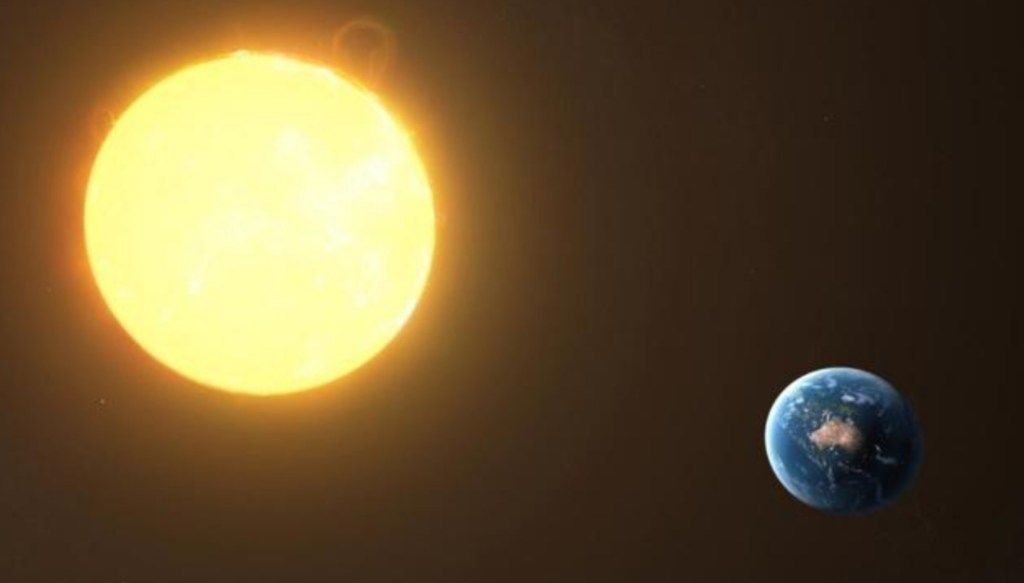
    The Sun and the Earth

    Today we are celebrating Hanuman Jayanti. On this auspicious day you will be glad to know how our ancient text about Lord Hanuman contains a very important scientific fact.

    If we look back at our ancient texts we realize that a lot was known by our ancestors that we somehow have forgotten and when these things are rediscovered we tend to believe that a new discovery has happened. One such thing is the distance between the Sun and the Earth.

    What is the distance of Sun from Earth & Who discovered the Astronomical Unit

    The distance between the Sun and the Earth is 1.49 million kilometres. The orbit of earth around the sun being elliptical the distance actually varies at different points by 3% and the average of these values is considered as the distance which is known as an Astronomical unit. In 1653 Christiaan Huygens calculated the distance between the Sun and the Earth. With due respect to his discovery he has also explained how he calculated this using the phases of Venus to find the angles in a Venus-Earth-Sun triangle.

    Is this a new discovery ?

    Above I have mentioned what is widely known and now I will mention something that is not known. 16th century Indian spiritual poet Tulsidas (1532-1623) has written a devotional hymn address to Lord Hanuman known as Hanuman Chalisa. The exact date of writing of Hanuman Chalisa is not known but it could be easily concluded that it was written before 1623. Along with Ramcharitmanas, Hanuman Chalisa were written by him inspired by Valmiki’s Ramayan which was written in 3rd century BCE. Now the question is how Hanuman Chalisa is related to this complex calculation of Astronomical Unit.

    Lord Hanuman

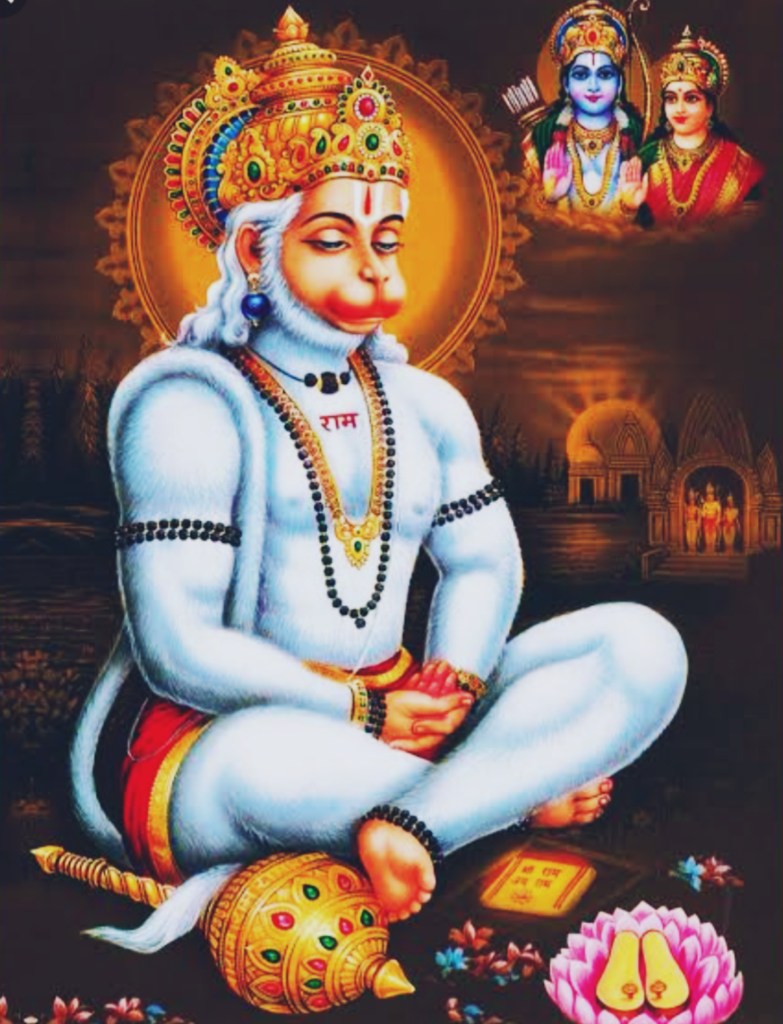
    Hanuman Chalisa, Valmiki’s Ramayan and many other ancient religious texts of Hinduism depicts a story about Lord Hanuman that when he was a child he thought of the Sun as a tasty fruit and went on to eat it.  Lets see what is written about this incident in verse 18 of Hanuman Chalisa.

    Baby Hanuman going after Sun

    जुग सहस्त्र जोजन पर भानू। लील्यो ताहि मधुर फल जानू।।

    Jug sahastra jojan par bhanu | Leelyo tahi madhur fal janu ||

    The meaning of this verse is Bhanu which means Sun is lying at a distance of Jug sahastra jojan and Hanuman dashed upon it thinking it to be a sweet fruit. Being in Awadhi language Yug and Yojan are written as Jug and Jojan which means the same.

    Now lets get to the calculations. 1 Jug(Yug) is a timespan of 12000 years and it is very common in ancient texts to use it as a unit to denote the figure 12000 . Sahastra is a Sanskrti word used to denote 1000. Jojan(or Yojan) is a unit of distance equal to 8 miles. Now,

    Jug Sahastra Jojan

    12000 * 1000 * 8 = 9,60,00,000 miles

    Since 1 mile = 1.6 kms

    9,60,00,000 * 1.6 = 15,36,00,000 kms or 153 million kms. Now the distance of Sun from Earth during aphelion i.e., when the Sun is farthest is 152 million kms approx.

    Another notable thing is that Tuslsidas was no scientist but a poet and nowhere had he mentioned how he derived this distance. Calculations or whole descriptions of anything are mentioned mostly when the discovery is new. When something is widely known these thing are not mentioned. Now the Valmiki’s Ramayan which dates back to 3rd century BCE also mentions this incidents and these stories about Lord Hanuman are way older than this. But we can easily conclude that the distance between the Sun and the Earth is widely known to Indians years ago. The question here arrives how we lost our great knowledge about astronomy. We can hope all this can be unearthed soon but as of now there are a lot of scientific discoveries that can be found when we go through our ancient sacred texts.